Updated
Poush Mela is the winter fair of Shantiniketan, held at the start of the Bangla month of Poush to mark the harvest and the founding of the ashram. For a few days the open ground at Purbapalli fills with craft stalls, folk singers and visitors from across the state. Its best-known sound is Baul music, the songs of the wandering minstrels of Birbhum.
Origins and meaning
The fair goes back to the Tagore family. On 21 December 1843, which fell on 7 Poush in the Bangla calendar, Debendranath Tagore and about twenty followers formally accepted the Brahmo faith. That date became the Poush Utsav. After a Brahmo prayer hall, the Upasana Griha, was consecrated in Shantiniketan in December 1891, a small fair was held in 1894 to mark the anniversary, and it grew year by year into today's mela.
The fair first stood on a ground north of the prayer hall and later moved to the larger field at Purbapalli, locally called Melar Math, which belongs to the Santiniketan Trust set up by Debendranath. Visva-Bharati, the university Rabindranath Tagore founded, has co-hosted it with the Trust.
What happens at the fair
The morning of 7 Poush opens with shehnai music. A group walks round the ashram singing, followed by a prayer meeting at Chhatimtala and a procession to Uttarayan, the Tagore family complex.
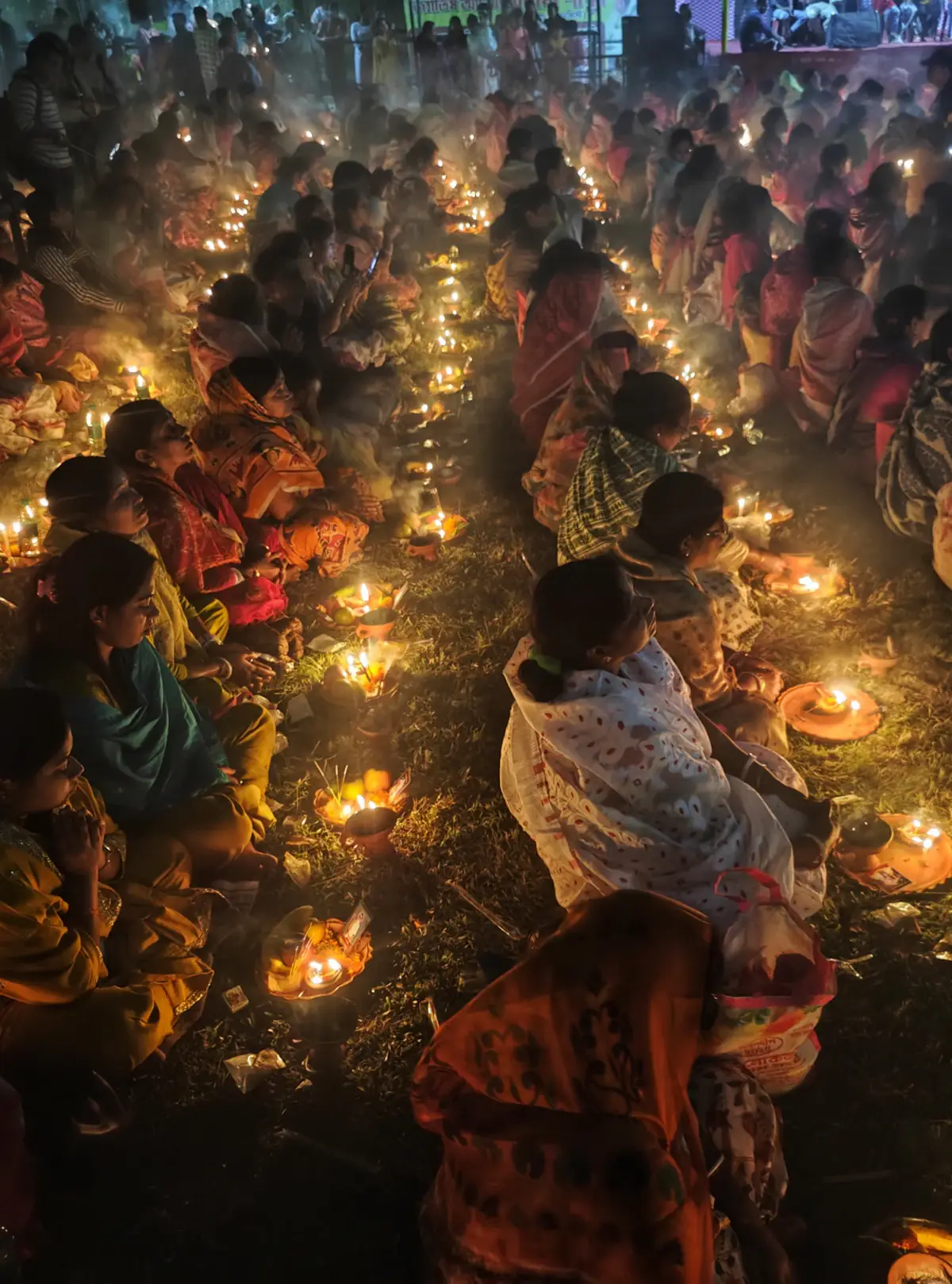
On the fairground, roughly 1,500 stalls sell printed textiles, handicrafts, household wares, toys and food. Baul singers perform on open stages and in small circles round fires late into the night, alongside kirtan, kobigan (sung poetic duels), folk dances and village sports. The last day traditionally belongs to the alumni and people of Shantiniketan.
Recent years and changes
The fair has been called off in difficult years: during the Bengal famine of 1943, after the 1946 riots, and during the Covid-19 pandemic. After 2019 there was a pause at the Purbapalli ground; in 2023 the fair was organised by the state with the Santiniketan Trust, and Visva-Bharati returned as organiser in 2024. For 2025 the university announced a six-day fair from 23 December under National Green Tribunal rules, including a ban on fireworks and limits on plastic. Arrangements change from year to year, so check the current announcement before travelling.
Visitor tips
Shantiniketan and Bolpur are among the busiest places in the state in the last week of December, and lodges book out early. Trains from Howrah to Bolpur are crowded; travel a day or two before the opening if you can. Nights are cold on the open plain, so bring a warm layer for the late Baul sessions. Since 2023 Shantiniketan has been a UNESCO World Heritage Site, and the ashram area has its own rules for visitors.
Poush Mela: questions
When does Poush Mela start?
On 7 Poush in the Bangla calendar, which usually falls on 23 December. The exact length and dates are announced each year by the organisers.
Why is Poush Mela held?
It marks the day in 1843 when Debendranath Tagore took up the Brahmo faith, and it also celebrates the winter harvest.
Where is Poush Mela held?
On the Purbapalli ground in Shantiniketan, near Bolpur in Birbhum district.
What is Poush Mela famous for?
Baul music, folk performances and stalls of rural crafts and printed textiles from across Paschim Banga.