Updated
Kali Puja, also called Shyama Puja, is the worship of the goddess Kali on the darkest night of autumn. In most of India that new-moon night is Diwali, the festival of lights; in Paschim Banga the lamps are lit for Kali instead of Lakshmi, and the worship runs through the night. After Durga Puja it is the second great community festival of the year, with its own pandals, images and crowds.
Origins and meaning
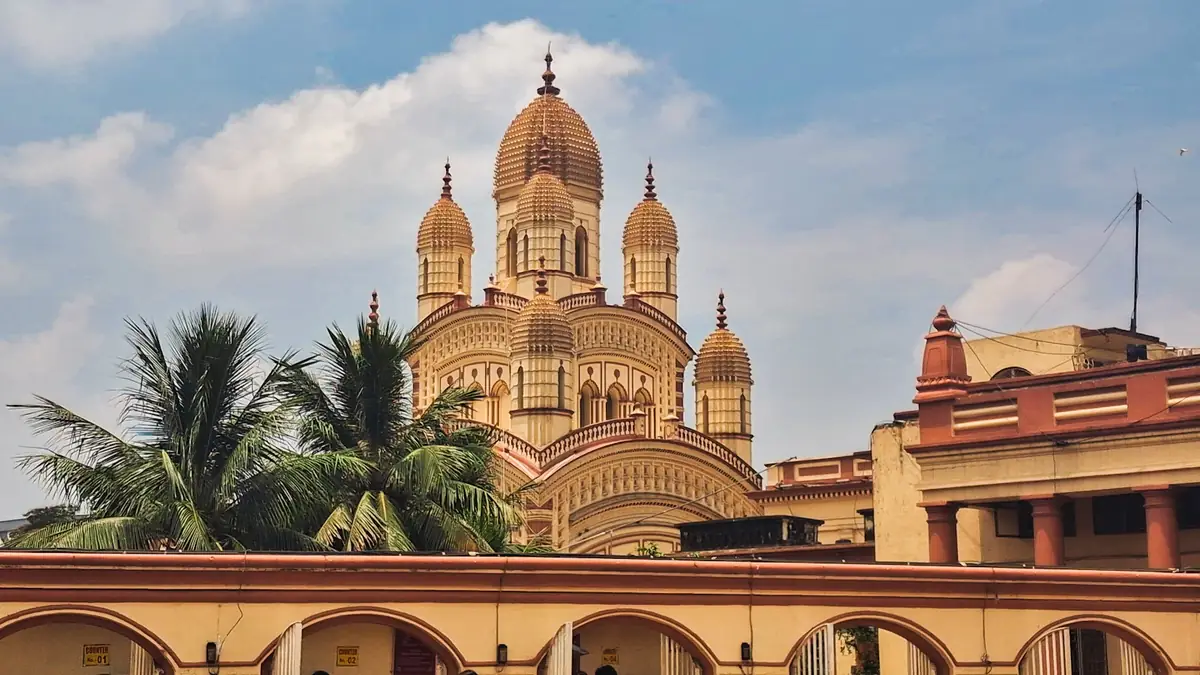
Kali is the fierce form of the mother goddess, shown dark-skinned, with a garland of heads and her tongue out, standing on the body of Shiva. Her worship is old, but the large public festival is more recent. Historians link its spread in the 18th century to wealthy patrons, notably Raja Krishnachandra of Nadia, and it grew further in the 19th century, when the mystic Sri Ramakrishna served as priest of the Kali temple at Dakshineswar and landowning families competed to hold grander celebrations.
The festival falls on the new moon of the lunar month of Ashwin or Kartik (calendars count the months differently), so its date moves between mid-October and mid-November. Other new-moon nights through the year carry their own forms of Kali worship, such as Kaushiki Amavasya, closely tied to the goddess Tara at Tarapith.
Rituals: Bhoot Chaturdashi and the night of worship
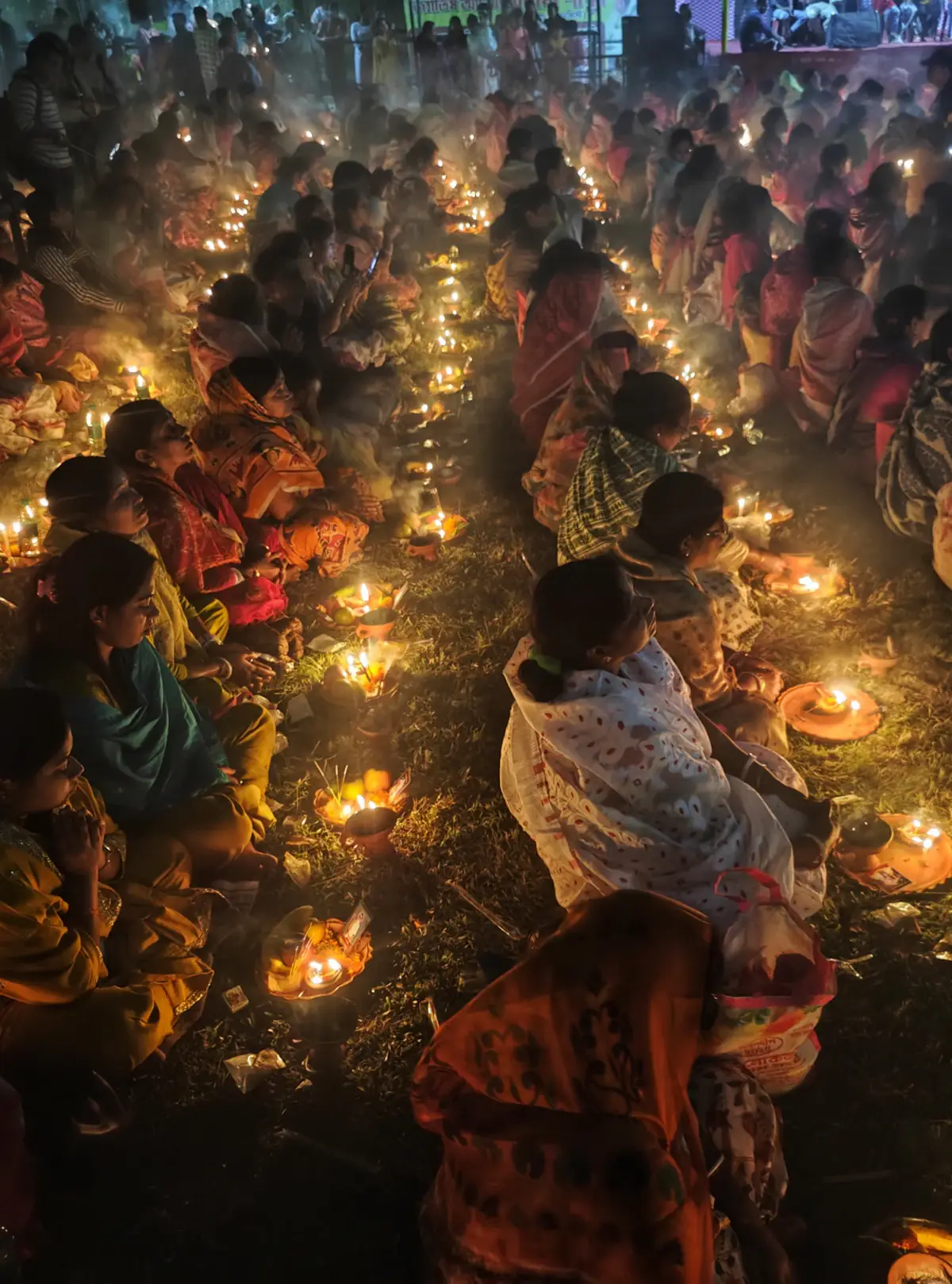
The evening before is Bhoot Chaturdashi. Households light fourteen small lamps around the home, a custom said to guide the spirits of ancestors, who are believed to visit on this night, and to keep evil spirits away.
On Kali Puja itself, worship begins after dark and continues until dawn. Clay images are installed in homes and in neighbourhood pandals, and offerings include red hibiscus along with sweets, rice and lentils. Some households and temples follow tantric rites; others keep to a vegetarian, Brahmanical form. The streets fill with clay lamps, strings of lights and fireworks, and many pandals add theatre or magic shows.
Where to experience Kali Puja
In Kolkata, Kalighat and Dakshineswar are the two great Kali temples and draw thousands on the night; expect long queues. North of the city, Barasat and Madhyamgram are known for the biggest neighbourhood pandals in the state, often with elaborate themes and lighting. The old riverside towns, including Barrackpore and Naihati, have their own long-running pujas, and in north Paschim Banga the festival is celebrated in Siliguri and Cooch Behar.
For a pilgrimage flavour, Tarapith in Birbhum is busy through this season, though its own biggest night is Kaushiki Amavasya earlier in autumn.
Visitor tips
Hotels in Kolkata fill around Diwali, so book early. Traffic is slow after dark and some roads are closed near big pandals; the Metro is the easiest way to move. Temples are at their most crowded between late evening and midnight. Firecracker rules are set each year by the courts and the state pollution board, so check the current restrictions if you plan to join in.
Kali Puja & Diwali: questions
Is Kali Puja the same as Diwali?
They fall on the same new-moon night. Across most of India the night honours Lakshmi as Diwali; in Paschim Banga the main worship is of Kali, though lamps and fireworks are shared by both.
What is Bhoot Chaturdashi?
The night before Kali Puja, when households light fourteen lamps to welcome ancestral spirits and ward off evil ones.
Where is the biggest Kali Puja in West Bengal?
Barasat, north of Kolkata, is widely described as having the largest community celebrations, while Kalighat and Dakshineswar are the most visited temples.
Does Kali Puja go on all night?
Yes. The worship starts after dark and many pujas continue until dawn, which is why it is also called Mahanisha Puja, the puja of the great night.