Updated
Poila Boishakh, the first day of the month of Boishakh, is the Bangla New Year, called Noboborsho in Paschim Banga. It falls on 14 or 15 April and is a state holiday. Families dress in new clothes, traders open fresh account books, temples fill from dawn, and the greeting of the day is Shubho Noboborsho, Happy New Year.
Origins of the Bangla calendar
The Bangla calendar, the bangabda, is a solar calendar, and its new year begins when the sun enters Aries. Paschim Banga follows the traditional reckoning, so the date shifts between 14 and 15 April depending on the moment of that transit; Bangladesh fixed its new year on 14 April after reforming the calendar.
Where the calendar came from is debated. One popular theory credits the Mughal emperor Akbar; another traces the era back to Shashanka, king of Gauda, around 593 CE. The sources do not settle the question, and the debate continues.
Customs and rituals
Haal Khata. The most distinctive custom belongs to shopkeepers and traders. On the first day of the year they close the old account book and open a new one, the haal khata, traditionally bound in red cloth, after a puja. Regular customers are invited in and offered sweets, and the shop is decorated for the day.
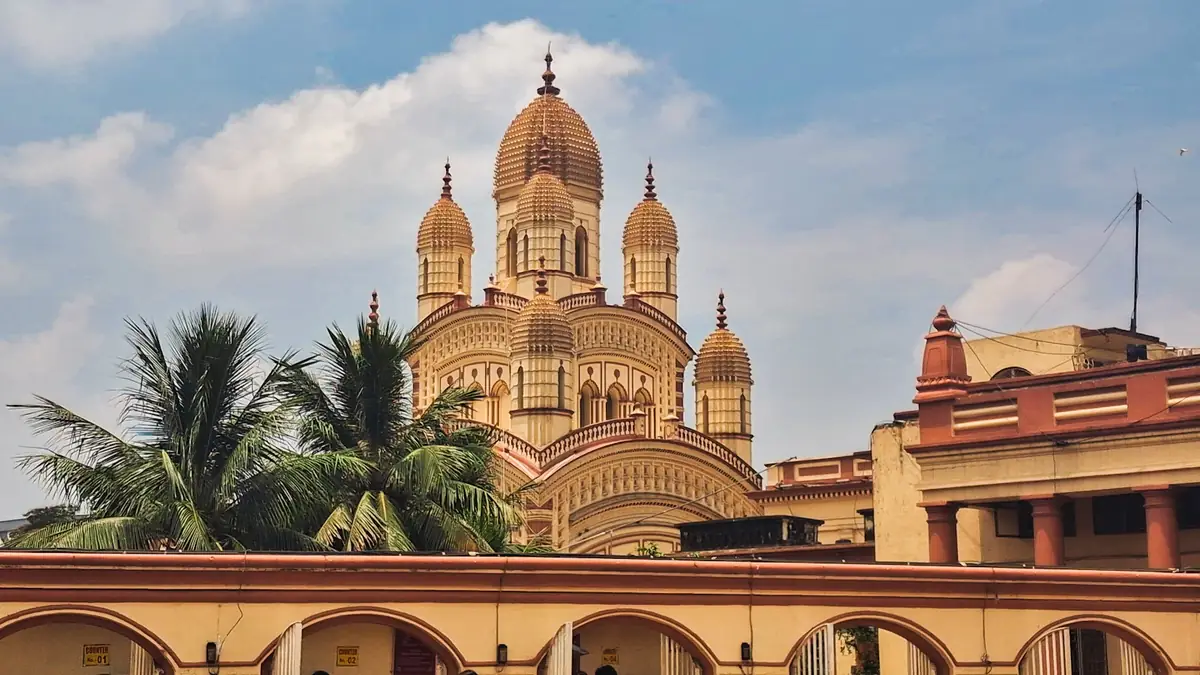
Temples. Kalighat and Dakshineswar draw long queues from early morning, as families and businesspeople come to pray for a good year.
Prabhat Pheri. Early-morning processions of children and cultural groups move through neighbourhoods singing Tagore's songs, and many clubs and institutions hold programmes of music and dance.
Clothes and food. Red and white are favoured colours, echoing the old red ledgers with white pages. Many families visit relatives and share sweets. In Bangladesh, eating panta bhat with hilsa has become associated with the day, though some question how old that tradition is.
Where to experience it
In Kolkata, visit a traditional market area such as the old business districts of north and central Kolkata in the morning to see shops dressed for Haal Khata, or join the crowds at Kalighat or Dakshineswar. Neighbourhood cultural programmes in the evening, with Rabindra Sangeet and recitation, are open to anyone who wanders in. Because it is a holiday, government offices and many businesses other than shops are closed, and roads near the big temples are crowded until midday.
Poila Boishakh: questions
Why does Poila Boishakh fall on 15 April some years?
Paschim Banga uses the traditional solar reckoning, so the date depends on when the sun enters Aries; Bangladesh fixes it on 14 April.
What is Haal Khata?
The custom of traders opening a new account book on New Year's Day, after a puja, and treating customers to sweets.
What do people say on Poila Boishakh?
The greeting is Shubho Noboborsho, meaning Happy New Year.
Is Poila Boishakh a holiday in West Bengal?
Yes. It is an official state holiday in Paschim Banga and Tripura.