Updated
Nabanna, literally "new food", is the harvest festival of rural Bengal, held in the month of Agrahayan once the main winter rice crop, the aman, is brought home. The new rice is first offered to the goddess Lakshmi and to the family's ancestors, and only then do people eat it themselves, in a feast of rice dishes and sweets made from fresh rice flour. It is celebrated in Paschim Banga, Bangladesh, Tripura, Assam's Barak Valley and eastern Jharkhand.
Customs and rituals
Nabanna follows the farming year. In the old village calendar, Agrahayan was the month of the aman harvest, and the festival gave thanks for it. Households offered cooked new rice to their ancestors, some as sweetened rice and some with curries, and a special dish to Lakshmi, the goddess of wealth and the harvest, made from grain husked from carefully chosen sheaves.
Customs varied from region to region across undivided Bengal. In some places a bamboo pole decorated with alpana and sheaves of new paddy was set up in the courtyard, and the new rice was pounded in a dhenki, the foot-operated wooden husker. A ritual called kakbali offered rice, a banana and a coconut sweet to a crow, and families watched where it flew to read their fortunes for the year. No one ate until the offerings were complete; the following day was basi nabanna, for finishing the leftovers. Children were given gifts and new clothes, and in some areas the feast ran to dozens of dishes.
Nabanna today
The festival has faded in many villages. New high-yielding and hybrid rice varieties are harvested at different times of year, so the single great harvest of Agrahayan that Nabanna celebrated is no longer universal. Where it survives, it has also become a cultural celebration shared by people of different faiths.
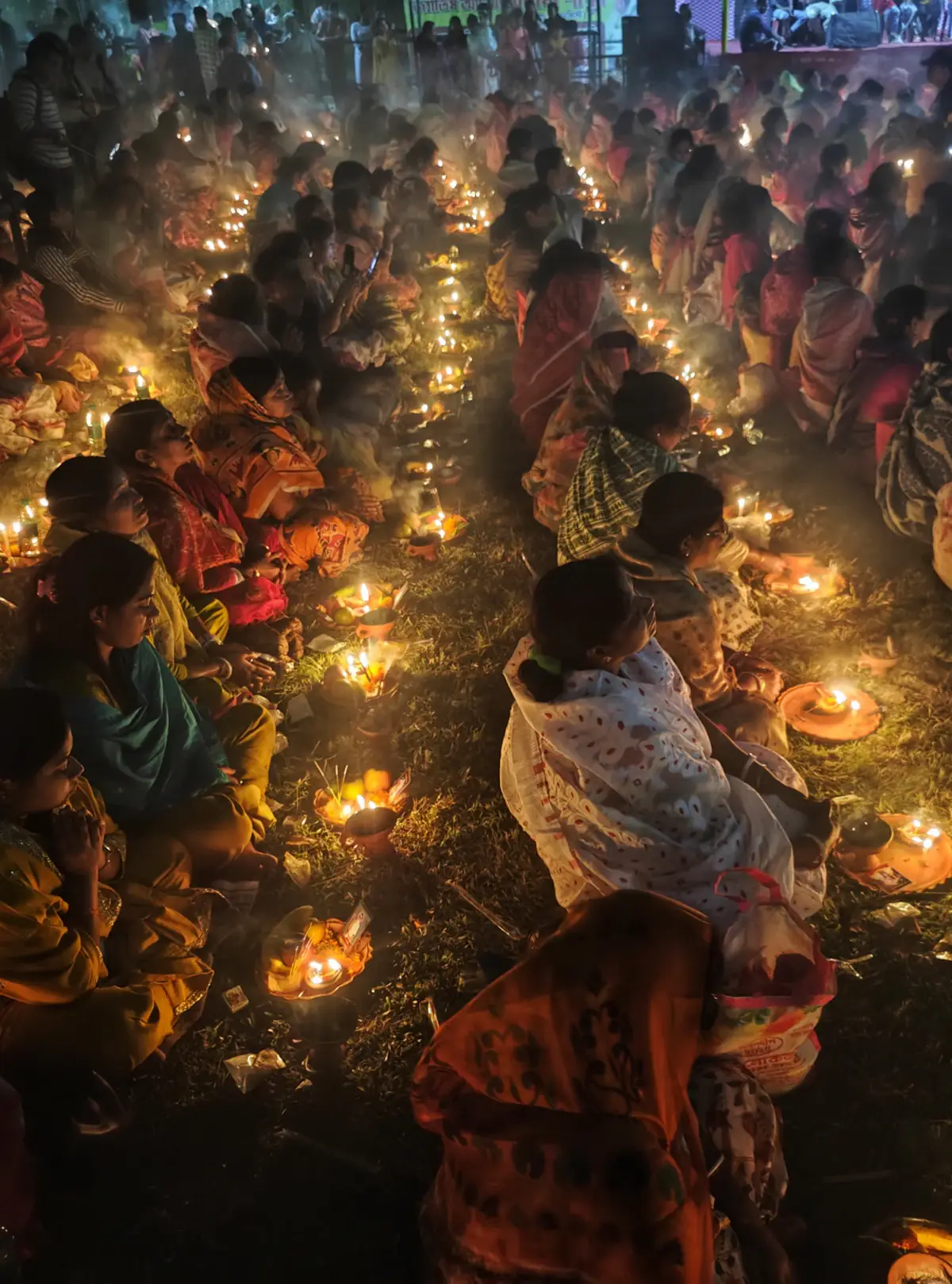
In towns, Nabanna lives on as fairs. At a Nabanna mela in Howrah district, for example, visitors from Howrah's villages and other districts come for pithe-making contests, displays of the old dhenki and farmers' paddy varieties, stalls of rural handicrafts, and performances of Baul songs, Chhau dance, jatra and kobi-gaan. Food is the main draw: patishapta (rice-flour crêpes filled with coconut and jaggery), payesh and other sweets made with new rice and winter jaggery.
Visitor tips
Ask locally or watch the newspapers for Nabanna fairs in district towns.
Nabanna: questions
What does Nabanna mean?
"New food" or "new rice": it is the festival of eating the first rice of the new harvest.
When is Nabanna celebrated?
In the Bangla month of Agrahayan, roughly mid-November to mid-December, after the aman rice harvest. In Bangladesh it is held on the first day of Agrahayan.
What food is made for Nabanna?
Dishes of new rice, payesh, and pithe such as patishapta, made from fresh rice flour.
Is Nabanna still celebrated?
Yes, but less widely than before, as changing rice varieties have altered the harvest season. Nabanna fairs keep the tradition alive in many districts.