Updated
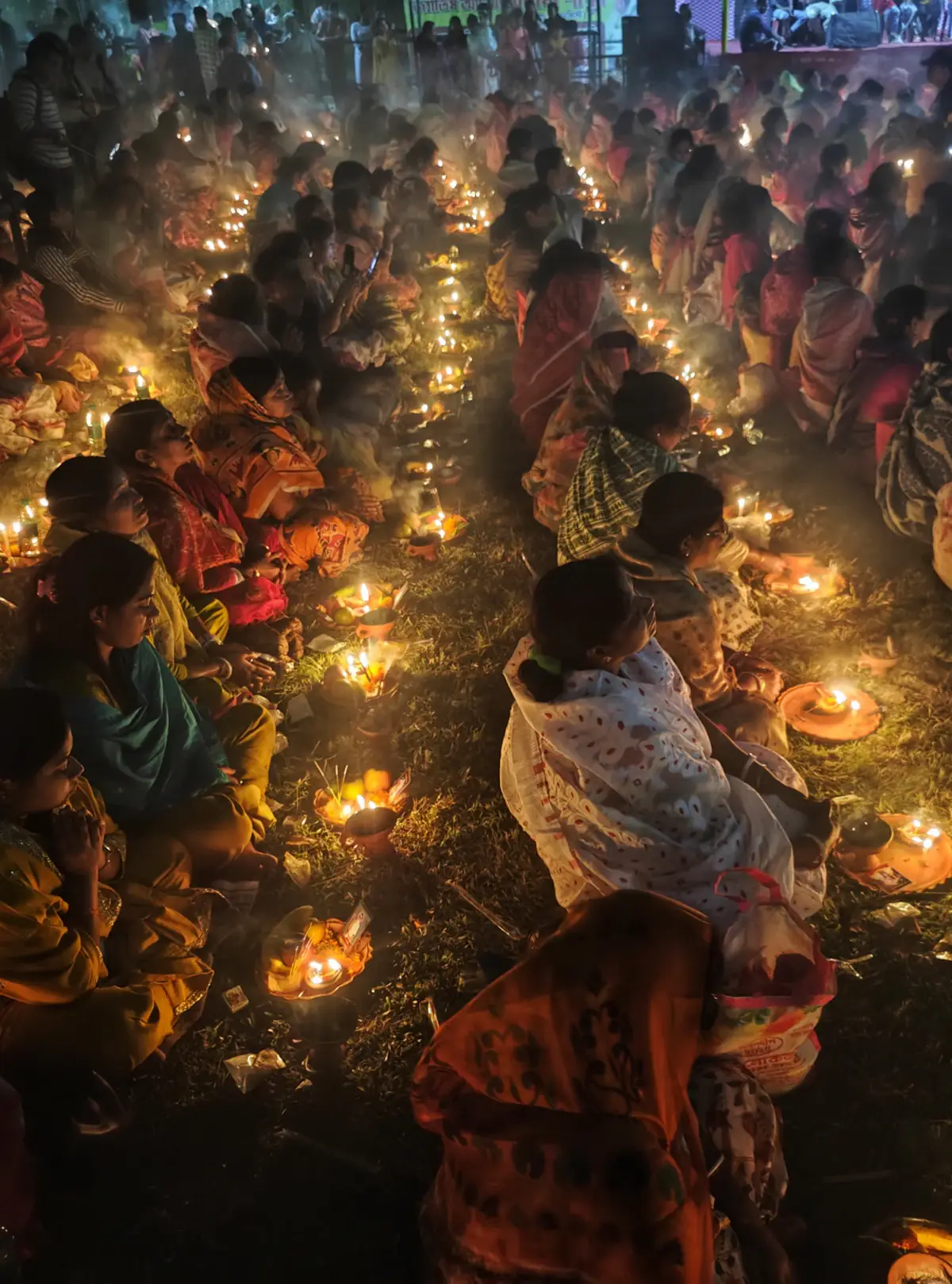
Gajan is a folk festival of Shiva held in the last days of the Bangla year, and Charak Puja is its climax on Chaitra Sankranti, the day before Poila Boishakh. Devotees called sannyasis or bhaktas take vows and undergo ordeals of devotion, ending with the Charak, in which they are swung round a tall pole. It is one of the oldest village festivals of Paschim Banga, and its fairs mark the turn of the year.
Origins and meaning
The name Gajan is often traced to garjan, the roar the sannyasis let out during the rites; another explanation links it to the village (gram) and its people. The festival honours Shiva, and in some places Dharmathakur, a village folk deity. In the Shiva Gajan of Chaitra, the sannyasis act as the wedding party at the god's marriage, which is re-enacted on the eve of the last day of the year; a separate Dharma Gajan is held in Boishakh.
At its heart is the idea of devotion through hardship and sacrifice, and of renewing fertility at the start of spring. Men and women can both take the sannyasi's vow. Preparations begin about a month ahead, when organisers go from house to house collecting paddy, oil, sugar, honey and money for the rites.
Rituals: the Charak pole and the ordeals
The Charak is a tall tree trunk stripped of roots and branches, with a bamboo wheel fixed at the top. Before it is raised, a mask of Ardhanarishwar, Shiva and Parvati joined in one figure, is worshipped on it. Devotees are then tied to the wheel and spun round high above the crowd. In the past, and in some villages still, hooks were pierced through the skin of the back; legal restrictions have pushed most places, especially in Kolkata, to use ropes alone. After the festival the pole is sunk in a river or pond and brought out again the next year.
Other ordeals of the Gajan week include walking on hot coals and piercing the tongue or skin with metal rods. Processions of performers in costume are part of the spectacle: in Murshidabad's Hajra Puja, a group dressed as twelve deities, among them Kali, runs through the streets, and in parts of Bardhaman and Murshidabad performers wear painted masks.
Where to experience it
In Kolkata, Charak is held at Kalighat and at the old market of Chatu Babu Latu Babu Bazar in north Kolkata, with devotees tied by ropes rather than pierced. Rural Gajan is stronger and more varied: villages in Bardhaman district such as Kurmun are known for fire rites, Krishnadevpur near Kalna for its masks, and Murshidabad and Cossimbazar for Hajra Puja. Gajan is also widely kept in Malda, Nadia and Birbhum. The rites close with the Charak mela, a village fair and procession around the pole.
Visitor tips
This is a religious observance, not a show: watch from a distance, do not get in the way of the rituals, and ask before photographing sannyasis. Mid-April is hot, so go early or late in the day. Some rites are intense to watch; the Kolkata versions are gentler.
Charak & Gajan: questions
What is the difference between Gajan and Charak?
Gajan is the week-long festival of Shiva's devotees at the end of Chaitra; Charak is its final rite, in which devotees are swung around a tall pole on Chaitra Sankranti.
When is Charak Puja held?
On Chaitra Sankranti, the last day of the Bangla year, in mid-April, the day before Poila Boishakh.
Is hook-swinging still practised at Charak?
Mostly not in the city: in Kolkata devotees are tied with ropes. In some villages hooks are still used, though the practice has been restricted by law for a long time.
Where can I see Charak in Kolkata?
At Kalighat and at Chatu Babu Latu Babu Bazar in north Kolkata, on the last day of Chaitra.