Updated
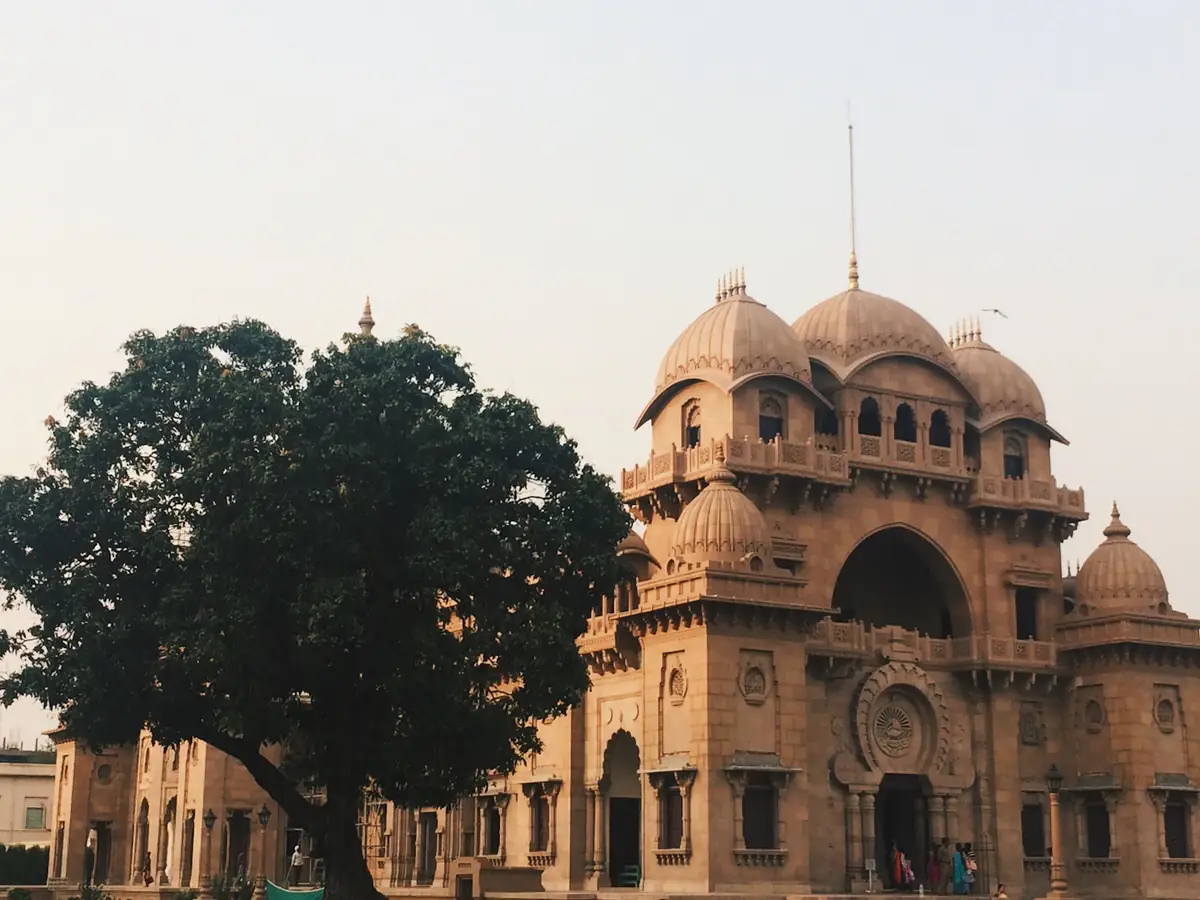
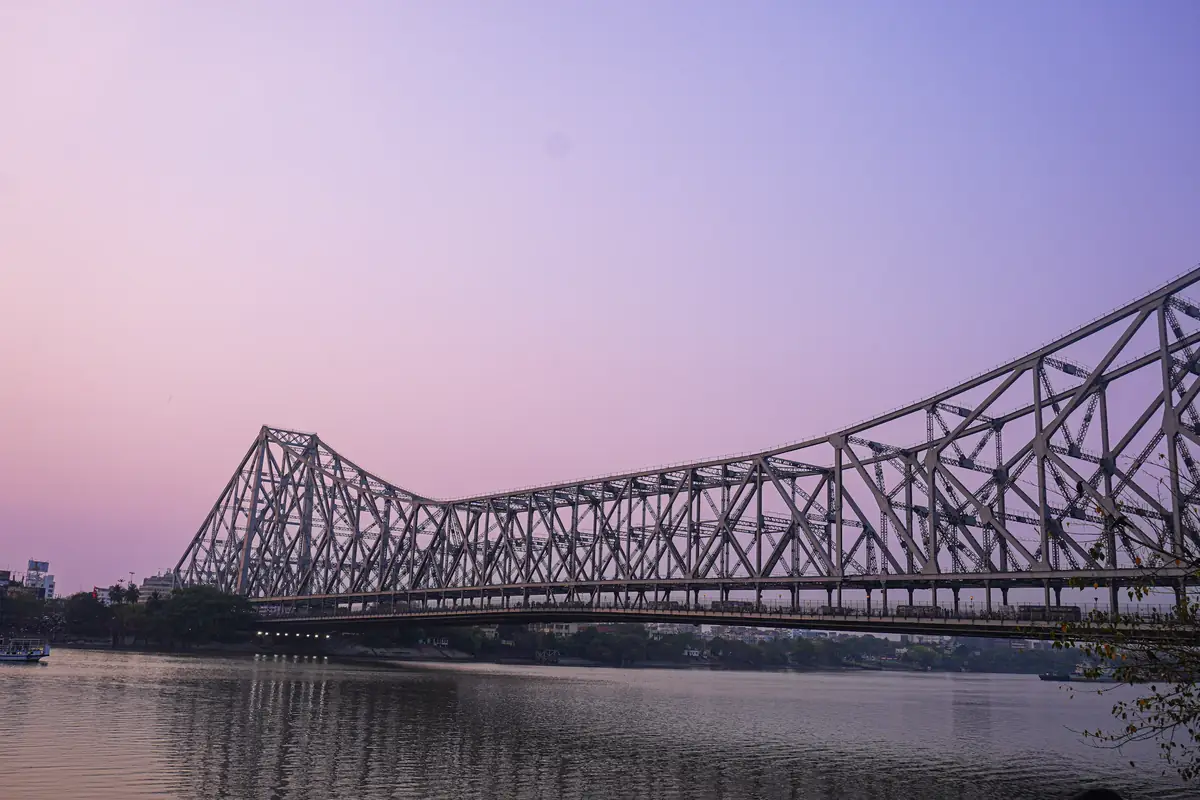
Howrah district lies on the west bank of the Hooghly, directly across from Kolkata, and for most travellers it is the first place they see in Paschim Banga: Howrah station is the state's main railway gateway. But the district is far more than a railway terminus. Its riverside holds Belur Math, the headquarters of the Ramakrishna Math and Mission, and the 18th-century Botanic Garden at Shibpur, while two of the country's best-known bridges, Howrah Bridge and Vidyasagar Setu, cross the river to Kolkata.
The district is small, about 1,467 square km, and bounded by water on three sides: the Hooghly on the east, the Rupnarayan on the west and south-west, and the Damodar in the north-west. It is divided into the Howrah Sadar and Uluberia subdivisions. The northern half is dense and industrial, with engineering works, foundries and other factories, and about two-thirds of the people live in urban areas. South and west, towards Uluberia, Bagnan and Shyampur, the district becomes largely rural.
That rural south has some of the easiest river escapes from Kolkata: Gadiara, where the Rupnarayan meets the Hooghly beside the ruins of Fort Mornington, the deer park at Garchumuk, and Deulti and Samtaber on the Rupnarayan, where the novelist Sarat Chandra Chattopadhyay lived.
Sights in and around Howrah city
Walk across Howrah Bridge, opened in 1943, and visit the Mullick Ghat Flower Market at its eastern end, trading since 1855. At Shibpur, the Acharya Jagadish Chandra Bose Indian Botanic Garden, founded in 1787, is home to the Great Banyan. Upstream at Belur, the Ramakrishna Math's temple stands by the river, and Vidyasagar Setu, India's first cable-stayed bridge, links the south of the city to Kolkata. The Rail Museum near Howrah station, opened in 2006, displays locomotives from the railway history of eastern India, and Santragachi Jheel next to Santragachi station fills with migratory birds in December and January.
Getting around Howrah district
Howrah station is the terminus for the main lines towards Bardhaman, Delhi and Kharagpur, and for dense suburban EMU services; Santragachi and Shalimar are the other large stations. Local trains on the Howrah–Kharagpur line serve Uluberia and Bagnan, the railheads for Gadiara and Garchumuk; Deulti is also on this line. Ferries cross the Hooghly between Howrah and Kolkata at many points. The nearest airport is Kolkata (CCU).
When to go
October to March is the best time, with mild days for riverside trips and walks in the Botanic Garden; winter is also when Santragachi Jheel's migratory birds arrive. Summer is hot, with maximum temperatures in the high 30s Celsius, and the monsoon brings most of the district's rain, roughly 1,460 mm a year. Durga Puja is celebrated across the district, as everywhere in the state.
Sightseeing guides in Howrah
Howrah district: questions
What is Howrah district famous for?
Howrah Bridge and Howrah station, Belur Math, the Botanic Garden at Shibpur with the Great Banyan, and riverside escapes such as Gadiara and Deulti.
Is Howrah part of Kolkata?
No. Howrah is a separate city and district on the west bank of the Hooghly, opposite Kolkata, though both are part of the same metropolitan area.
What are the subdivisions of Howrah district?
Howrah Sadar and Uluberia.
Where can I see migratory birds near Howrah?
At Santragachi Jheel, a large lake next to Santragachi station, especially in December and January.