Updated
Panchmura is a village in Taldangra block of Bankura, about 21 km from Bishnupur, famous as the home of the Bankura horse, the long-necked terracotta horse that is the logo of All India Handicrafts. Its potters also make terracotta elephants, Manasa chali plaques of the snake goddess and other ritual figures. The Bankura horse has had a Geographical Indication tag since 2018.
Things to do in Panchmura
Potters' workshops
Family workshops where horses are thrown on the wheel in parts, assembled, dried and fired; you can watch and buy directly.
Bankura horses
Tall, stylised horses with long necks, upright ears and alert stance, from tabletop size to large figures.
Manasa chali
Terracotta plaques of the snake goddess Manasa, with rows of hoods fanning out behind her in a half-moon.
Terracotta elephants
Terracotta elephants, which Bankura potters make alongside their horses.
Bishnupur
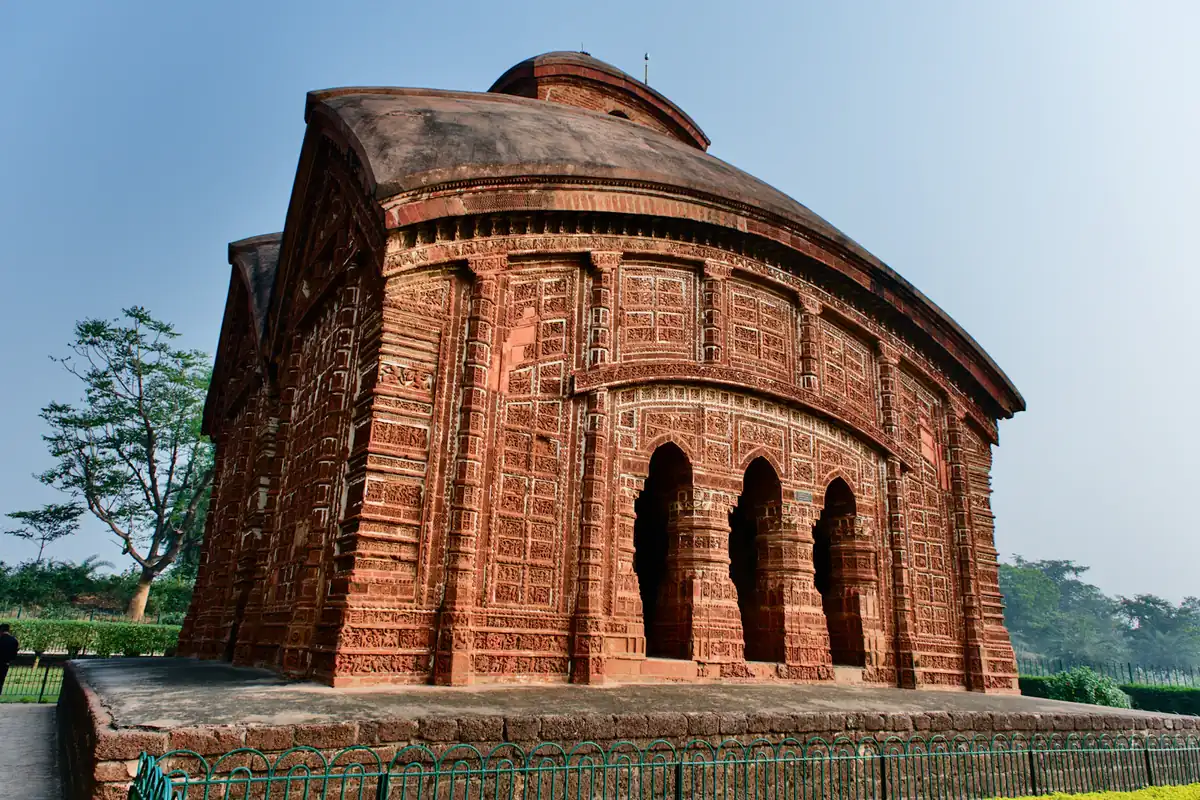
The temple town of the Malla kings, about 21 km away, with its terracotta temples and Baluchari weavers.
How a Bankura horse is made
A Panchmura horse is hollow and built from separate pieces thrown on the potter's wheel: four legs, a neck in two parts, and a face made of several pieces. The ears and tail are moulded by hand and fitted into grooves. The assembled horse is dried slowly so that it does not crack, and then fired.
The colour comes from the firing. If smoke is let out of the kiln, the clay fires red; if the vents are sealed, starving the fire of air, the clay turns black. Over generations the potters have moved from realistic horses to the abstract, elongated form that is now famous, emphasising the neck, ears and legs.
Ritual and recognition
Terracotta horses were first made as offerings. In the villages of south-west Bengal they are left at shrines when a wish is fulfilled, especially in the worship of Dharma Thakur. Today the Panchmura horse also decorates homes far beyond Bengal.
The horse appeared on an Indian postage stamp in 1957, and it serves as the logo of All India Handicrafts. It was registered as a Geographical Indication on 28 March 2018. Other Bankura villages such as Rajagram, Sonamukhi and Hamirpur make horses too, each in their own style, but the Panchmura horse is usually considered the finest.
How to reach Panchmura
By road. Panchmura is about 21 km from Bishnupur; most visitors come by hired car from Bishnupur as a half-day trip.
By train. Bishnupur Junction and Bankura Junction have direct trains from Howrah; check current timings with Indian Railways.
By air. Kolkata (CCU) is the nearest major airport.
Panchmura: travel questions
What is Panchmura famous for?
Panchmura is a village in Taldangra block of Bankura, about 21 km from Bishnupur, famous as the home of the Bankura horse, the long-necked terracotta horse that is the logo of All India Handicrafts. Its potters also make terracotta elephants, Manasa chali plaques of the snake goddess and other ritual figures.
What is the best time to visit Panchmura?
The best time to visit Panchmura is October to March.
How far is Panchmura from Kolkata?
Panchmura is about 165 km from Kolkata by road, about 4 hours by car depending on traffic.
How do I reach Panchmura?
By air: the nearest airport is Netaji Subhas Chandra Bose International Airport (CCU), Kolkata, about 4.5 hours by road. By train: Bishnupur or Bankura Junction. By road: about 165 km from Kolkata.
What are the places to visit near Panchmura?
Places near Panchmura include Bishnupur (about 19 km), Gangani (about 20 km), Bahulara (about 25 km) and Bankura (about 30 km). Distances are in a straight line.
What is the Bankura horse?
A stylised, long-necked terracotta horse made by the potters of Panchmura and other Bankura villages, used as a ritual offering and as decoration.
Does the Bankura horse have a GI tag?
Yes. It was registered as a Geographical Indication on 28 March 2018.
Why are some Bankura horses black?
Black horses are fired with the kiln vents sealed, which starves the fire of air; red horses are fired with the smoke let out.
Can I buy terracotta directly in Panchmura?
Yes. The workshops sell horses, elephants and other pieces directly; sizes and prices vary widely.