Updated
Madan Mohan Bari is the temple of Madan Mohan, the form of Krishna worshipped by the Koch kings, and it stands in gardens in the middle of Cooch Behar town. Maharaja Nripendra Narayan had it built in the late 1880s, and it was opened on 21 March 1890. It is still run by the Debottar Trust Board that manages the former royal temples, and it is the religious centre of the town's year, from Rath Yatra to the Raas festival.
History and building
Construction is usually dated to 1885–1889, although one account gives 8 July 1889 for the laying of the foundation stone. Rajmata Nishimoyee Devi opened the temple on 21 March 1890, and on the same day the Anandamoyee Dharamshala, a pilgrims' rest house, opened on the eastern side of the grounds.
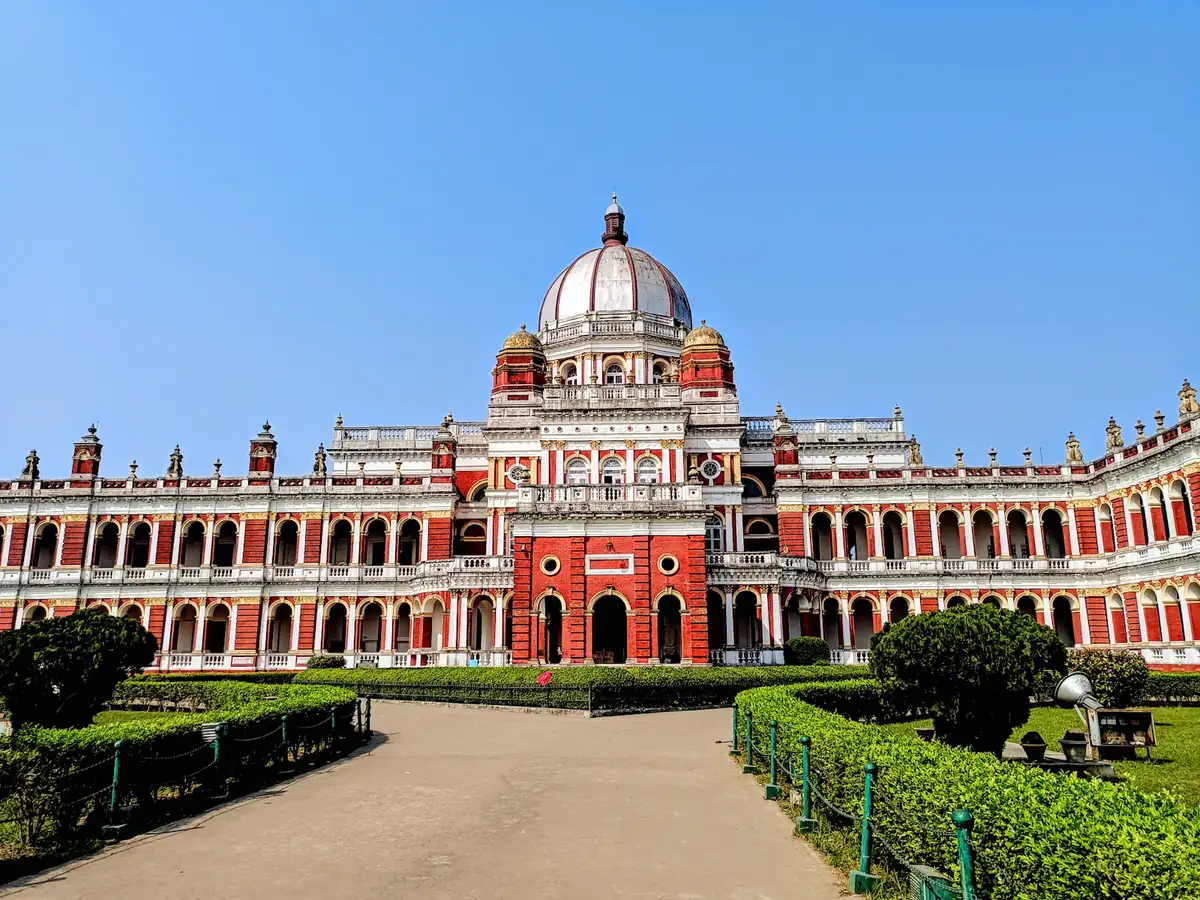
The building is a long, white, single-storey range of four rooms side by side, facing south, with a dome rising over the cornice. It mixes the Bengal char chala and dalan forms with European touches; one travel writer also saw Islamic and Central Asian elements in it. The ceiling of the central room is carved as a white lotus, and visitors enter through a Nahabat Khana, the old music gate. Lawns with flower borders surround the temple.
The deities
Madan Mohan. The main sanctum holds two images of Madan Mohan in eight-metal alloy, painted with gold: the larger Bara Madan Mohan, seen daily, and the smaller Chhoto Madan Mohan, who gives darshan on only three days a year. Unusually for a Krishna temple, there is no image of Radha. Shaligram stones, including Ananta Narayan, are worshipped alongside.
The goddesses. Other rooms and shrines hold Kali, Tara, a stone image of Bhavani in her own temple on the east, silver images of Katyayani, Joytara and Annapurna, a five-faced Ganesha on a lion and an Anandamoyee Kali said to have been installed by Maharaja Harendra Narayan in 1831.
Boro Tara and Durga. The Boro Tara puja, one of the oldest Kali pujas in the district at over 150 years old, was moved here from the palace and is now held by the trust board. A clay Durga, riding a tiger on one side and a lion on the other, is made in the same form every year for Durga Puja.
Festivals and visiting
At Rath Yatra Madan Mohan's chariot travels to the Dangrai temple at Gunjabari, and returns after seven days for the Ulto Rath. On Uthan Ekadashi Chhoto Madan Mohan is ritually woken after four months and bathed in milk, water, ghee and honey. The Raas festival at Raas Purnima, when the Raas Chakra is turned in the temple, opens the town's great fair.
The temple is a short walk from Cooch Behar Palace and Sagardighi. Opening hours and offering arrangements are set by the trust board; check current times locally.
Madan Mohan Bari: questions
Who built Madan Mohan Bari in Cooch Behar?
Maharaja Nripendra Narayan of the Koch dynasty. It was built in the late 1880s and opened on 21 March 1890.
Why is there no Radha in Madan Mohan Bari?
The main sanctum holds only Madan Mohan, in two images, Bara and Chhoto Madan Mohan. The absence of Radha is one of the temple's unusual features.
Which other deities are worshipped at Madan Mohan Bari?
Kali, Tara, Bhavani, Katyayani, Joytara, Annapurna, Ganesha and Durga, among others, in shrines around the complex.
Is Madan Mohan Bari linked to the Rash Mela?
Yes. The Raas festival starts here at Raas Purnima, when the Raas Chakra is turned, and the town's fair follows.