Updated
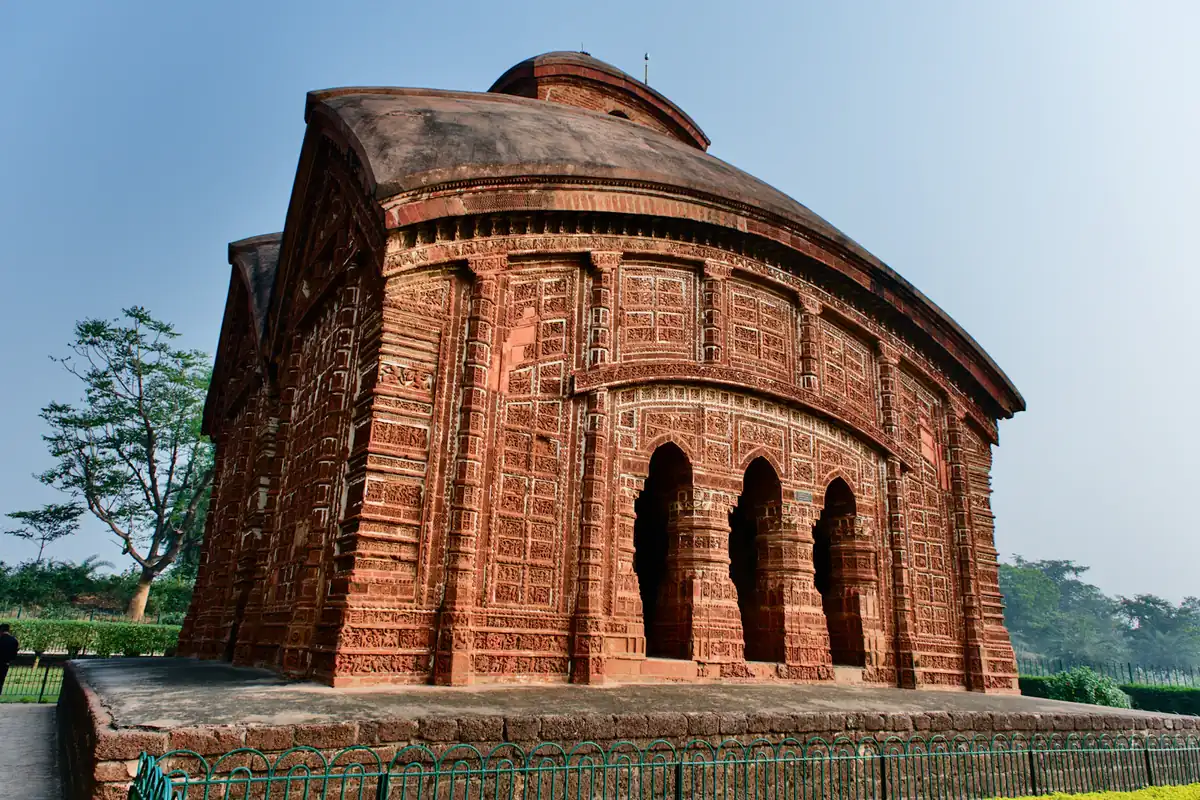
Lalji Temple is a single-spired temple in Bishnupur, built in 1658 by the Malla king Bir Singha Dev and dedicated to Radha and Krishna. Unlike the terracotta-covered Shyam Rai and Jor Bangla temples, it is built of stone with only fragments of surface decoration left, which makes its clean square form and gently sloping roof easier to appreciate.
Architecture
The temple follows the ekaratna plan: a square base about 12.3 m on each side, a gently curved roof and a single tower rising to about the same height again. Three arched entrances on the front lead into a covered ambulatory around the sanctum.
The front wall once carried ornamental motifs, but only fragments survive; the upper parts of the arches keep some carved detail. The contrast with the brick temples nearby shows the range of materials the Malla builders used, from brick and terracotta to the local laterite.
Bir Singha and the lakes
Bir Singha Dev, who built the temple, is also credited with digging the great lakes (bandhs) of Bishnupur, among them Lalbandh, Krishnabandh, Jamunabandh, Shyambandh and Pokabandh, in the same year, 1658. The lakes supplied water and also served as a defence for the town. Lalbandh is said to be named after Lalbai, a dancer at the court of Raghunath Singha.
Radha Shyam Temple nearby
A century later, in 1758, King Chaitanya Singha built the Radha Shyam Temple, another ekaratna, about 12.5 m square and 10.7 m high. Unlike Lalji, its walls are decorated with terracotta plaques of scenes from the Ramayana, Vishnu reclining on the serpent Ananta, and Radha and Krishna, and Krishna is still worshipped here with Radha. Both temples are protected by the Archaeological Survey of India.
Lalji Temple: questions
When was Lalji Temple built?
In 1658, by King Bir Singha Dev of the Malla dynasty, according to its inscription.
Which deity is Lalji Temple dedicated to?
Radha and Krishna.
Is Lalji Temple a terracotta temple?
No. It is built of stone, and only fragments of its surface ornament survive.
Is Lalji Temple on the UNESCO tentative list?
Yes. It is one of the Temples of Bishnupur on UNESCO's tentative list since 1998.